

AI services in California: automation and consulting
Our AI services in California cover the whole state, from Bay Area offices to Central Valley packing sheds and Inland Empire warehouses. For example, that can mean grower settlement statements in Fresno or carrier paperwork in Ontario. It can also mean tasting-room bookings on the Central Coast. Because we work remotely over video, every region gets the same service, during U.S. business hours that start at 7:00 AM Pacific. In addition, every engagement begins with a free consultation and a written estimate of savings.
How California's regions differ in the paperwork they produce
California is several economies sharing one rulebook. For instance, the Central Valley runs on harvest schedules, grower contracts and cold-chain records. Meanwhile, the Inland Empire moves imported freight through large distribution centers, while the Central Coast mixes wine, farming and tourism. Similarly, firms with offices in both Northern and Southern California juggle the same documents across very different teams.
However, the state’s privacy and AI laws apply wherever a business sits. In particular, the CCPA covers for-profit companies that meet its revenue or data thresholds. Separately, AB 2013 has required developers of public-facing generative AI systems to post training-data documentation since January 1, 2026.
As a result, a statewide automation plan should map each region’s documents first, then check which law each data flow touches. That way, AI services in California stay consistent across every site, so that one review process covers every office. Meanwhile, each region keeps the document formats it already uses.

What our AI services in California handle across regions
We pick work that is repetitive, clearly defined and easy to undo if something goes wrong. For example, a Central Valley packer might want grower statements checked against receiving tickets. Likewise, a company with sites in Riverside and San Mateo might want one intake process for both. Either way, pricing, hiring and customer decisions stay with your people, while the system reads, matches and drafts.
Document & Data Processing
Grower settlements, bills of lading, winery compliance logs and vendor invoices read into structured fields, so that each value links back to its source page.
Customer Response Automation
Routine questions from customers, growers or tenants answered in English or Spanish. Meanwhile, anything about money, contracts or complaints goes to a person with context.
Workflow Automation
Handoffs between regional offices connected across your ERP, CRM and shared drives, instead of being emailed and rekeyed between teams in different cities.
Custom AI Agents
Agents that finish multi-step tasks, such as assembling a complete carrier claim packet, within the approval limits and permissions you set.
Internal Knowledge Search
Policies, price lists and procedures from every California site searchable in plain English, with each answer citing the document it came from.
Reporting Automation
Weekly reports by region built automatically from your systems. Consequently, managers in each office see the same figures, explained in a short summary.
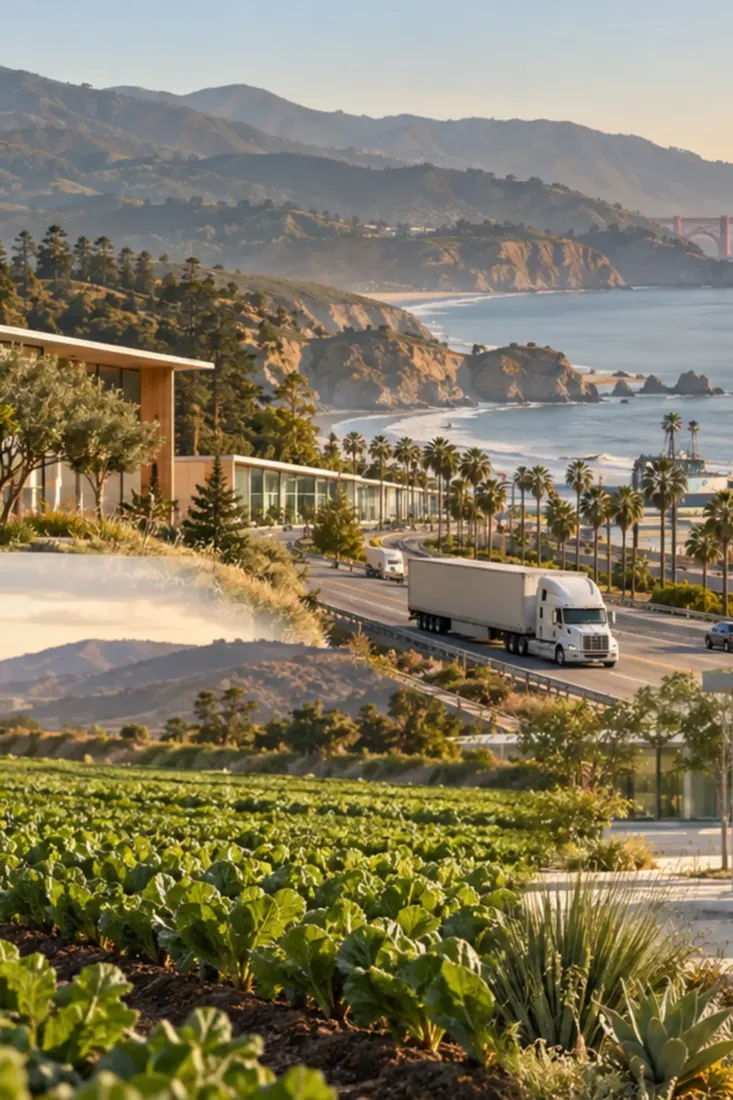
California sectors, from Valley packing sheds to coastal tasting rooms
These statewide sectors give our AI services in California the most repeatable paperwork. Even so, the right first project depends on your region, your systems and the data you hold. Because of that, we always start by reviewing your workflow, not a template.
Central Valley Agriculture
Grower contracts, receiving tickets, settlement statements and harvest crew schedules for packers, shippers and farm management companies across the San Joaquin Valley.
Inland Empire Distribution
Inbound appointments, carrier invoices, damage claims and proof-of-delivery files for third-party logistics firms running warehouses in Riverside and San Bernardino counties.
Central Coast Wine & Tourism
Wine club orders, tasting reservations, bulk wine contracts and event bookings for wineries and hospitality businesses from Paso Robles to Santa Barbara.
Multi-Site Medical Groups
For instance, referral intake, appointment reminders and insurance verification for physician and dental groups with clinics in several California regions.
Franchise & Retail Chains
Store opening checklists, vendor onboarding, location-level sales reports and customer messages for franchise operators with sites up and down the state.
Professional Services Firms
Engagement letters, conflict checks, time entry review and client intake for law, accounting and engineering firms with offices in both Northern and Southern California.

Good first automation projects for California teams
Grower Settlement Checks
The system reads receiving tickets, grade reports and contract terms, then drafts each grower’s settlement statement. It also flags weights or prices that do not match the contract. However, an accounting lead approves every statement before payment goes out.
Carrier Claim Packets
When freight arrives damaged, the system gathers the bill of lading, delivery photos and receiving notes into one claim packet. It then drafts the claim letter. Finally, a warehouse supervisor reviews the packet and decides whether to file it.
Wine Club Order Exceptions
Failed payments, address changes and shipping holds for wine club releases are sorted and matched to each member record. The system drafts a reply for each case. Meanwhile, a club manager approves the messages and any refunds before they go out.
Cross-Region Referral Routing
Incoming referrals are read, checked for missing records and matched to the nearest clinic with the right specialty. Then a scheduling coordinator confirms each referral, so patients in every region reach the correct office without retyped paperwork.
Franchise Opening Checklists
For each new location, the system tracks permits, vendor setup and training tasks against your opening checklist. It sends reminders when items slip. Even so, the franchise development manager signs off each stage before the store opens.
Conflict Check Drafts
New matter requests from any office are compared against client and party records, and possible conflicts are listed with sources. As a result, the conflicts team starts from a short list, while an attorney still makes every clearance decision.
Five remote stages for a project spanning California offices
Every project follows the same five stages over video. Our hours run 9:00 AM to 7:00 PM Central, which is 7:00 AM to 5:00 PM Pacific. Therefore, sessions fit the California workday, including early starts in farming and logistics.
Discovery
To begin with, we interview staff in each region over video. We map the workflow step by step and note every system, document type and kind of personal information it touches.
AI Strategy
After that, we score each opportunity on build cost, time to value and annual savings. We also note which California laws each data flow could touch, so your counsel can review early.
Pilot Build
Then we build the top-ranked idea as a fixed-scope pilot at one site. That way, your team judges real output from its own files before approving a rollout to other regions.
Implementation
Following the pilot, we connect the system to your live tools and train each office on video calls. In addition, we set human review gates and a documented rollback plan.
Optimization
Finally, we review accuracy every month and tune prompts and retrieval for each region. Each remote review ends with a written report on hours saved for your managers.
What clients say
AI services in California: training data, time zones and rollout questions
Do you work with businesses in California?
Yes. We provide AI services in California to businesses in every region, from the Bay Area and Sacramento to the Central Valley, the Inland Empire and the Central Coast. That said, delivery is fully remote from our base in Canterbury in the UK, so we do not visit offices. Instead, discovery calls, demos and training happen over video, Monday to Friday, 9:00 AM to 7:00 PM Central, which is 7:00 AM to 5:00 PM Pacific.
If we fine-tune a model for a public chatbot, must we publish training data details?
Possibly. California’s AB 2013, in Civil Code sections 3110 and 3111, covers developers of generative AI systems made available to the public. Notably, the definition of a developer includes anyone who substantially modifies a system, and fine-tuning counts as a substantial modification. In that case, the developer must post a high-level summary of the training datasets on its website. By contrast, a tool used only by your own staff is not offered to the public. Your counsel should still confirm how it applies.
Can one rollout cover offices in Northern and Southern California?
Yes, and we usually recommend it. Because everything runs over video, a Fresno packing office and a Riverside warehouse join the same sessions without anyone traveling. To begin with, we build the pilot at one site. Then we adjust it for each region’s document formats, languages and systems before extending it. As a result, every office follows the same review process, while local differences are handled in the setup.
What does a first pilot cost for a California business?
Each pilot is quoted at a fixed price before work starts, based on the workflow, the systems involved and the volume of documents. For example, a single-site intake process costs less than one that spans several regional offices. Your free consultation ends with a written estimate of cost and expected hours saved. Therefore, you can compare the pilot against the staff time it would free up, and decide before committing further budget.
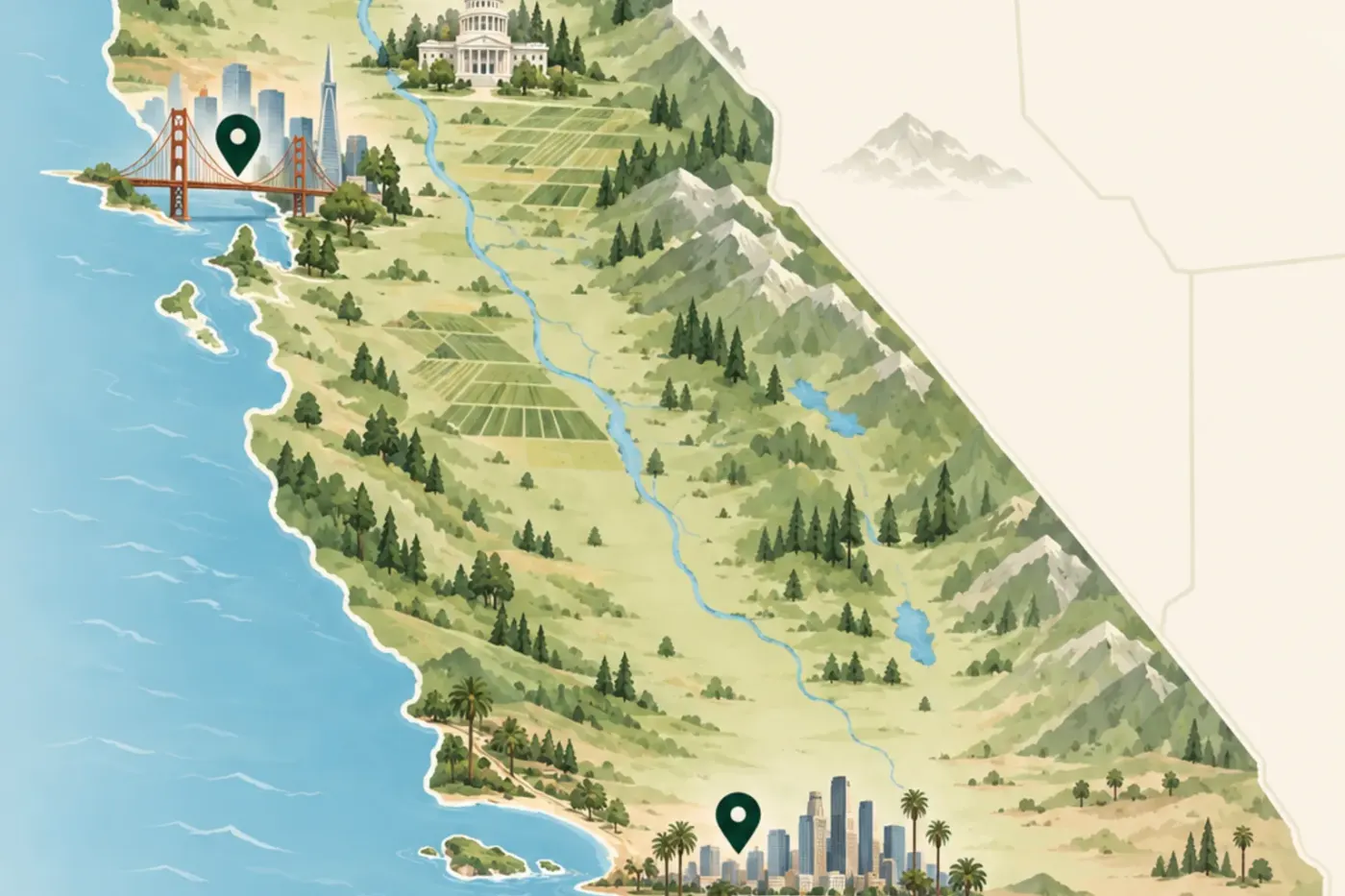

Nearby areas we also serve
Clients frequently operate across state and metro lines. We work throughout the region.

Ready to find out what AI could save your California business?
Book a free 30-minute consultation. Bring one workflow that eats your team’s week and we will tell you honestly whether automating it is worth the money.