

AI services in Texas: automation and consulting
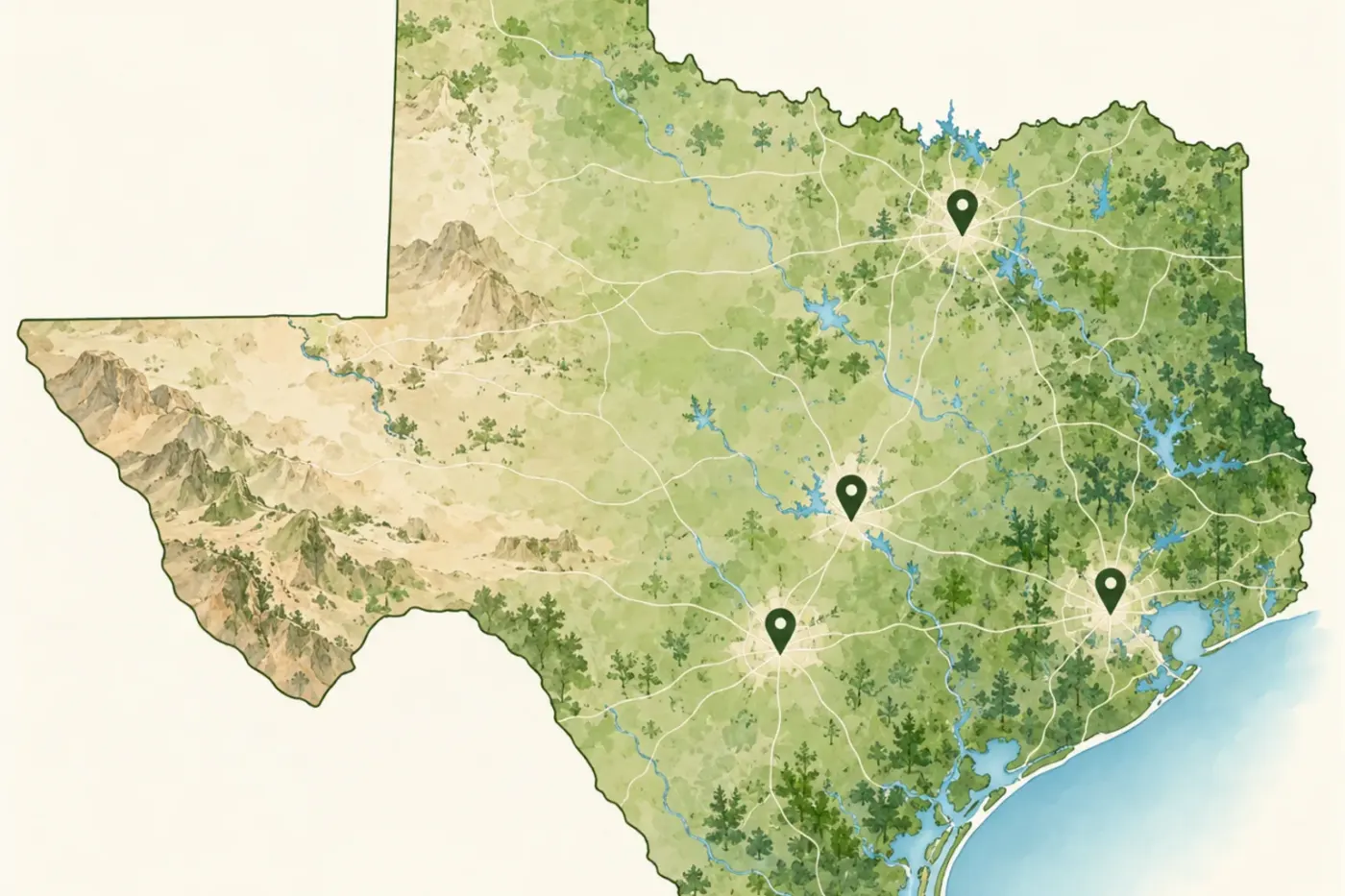
Our AI services in Texas reach every region. That includes Dallas–Fort Worth and Houston, as well as the Permian Basin, the Panhandle and the Rio Grande Valley. For example, that can mean water-hauling tickets in Midland or feedyard records near Amarillo. It can also mean customs paperwork in Laredo. Because we work remotely over video, during U.S. business hours on Central time, every region gets the same service. In addition, every engagement begins with a free consultation and a written estimate of savings.
How Texas regions, from the Permian to the Valley, generate paperwork
Texas is less one market than a set of regional economies. For instance, the Permian Basin runs on oilfield trucking, water hauling and equipment rental tickets. Meanwhile, the Panhandle and West Texas combine cattle, cotton and wind and solar projects. Similarly, Laredo and the Rio Grande Valley handle cross-border freight, while clinic networks serve patients in every corner of the state.
Several statewide laws reach most of these businesses. In particular, the Texas Data Privacy and Security Act covers many companies that process personal data. Also, TRAIGA has governed AI use since January 1, 2026. In addition, SB 1188 requires many health care providers to keep electronic health records physically in the United States.
As a result, AI services in Texas should start with a map of where each record lives. That way, a statewide rollout keeps patient files, customer data and vendor documents under the right rules. Meanwhile, each region keeps the forms and systems it already uses.

What AI services in Texas look like outside the big metros
We choose work that is repetitive, clearly defined and easy to undo if something goes wrong. For example, a Midland trucking firm might want run tickets matched to invoices. Likewise, a clinic network might want referral intake handled the same way in Lubbock and Tyler. Either way, pricing, safety and care decisions stay with your people, while the system reads, matches and drafts.
Document & Data Processing
Run tickets, cattle receiving sheets, commercial invoices and patient intake forms read into structured fields, so that each value links back to its source page.
Customer Response Automation
Routine questions from customers, drivers or patients answered in English or Spanish. Meanwhile, anything about money, safety or care goes to a person with context.
Workflow Automation
Field, yard and office steps connected across your dispatch, accounting and records systems, instead of being phoned in and rekeyed at headquarters.
Custom AI Agents
Agents that finish multi-step tasks, such as assembling a complete crossing document set, within the approval limits and permissions you set.
Internal Knowledge Search
Safety manuals, rate sheets and clinic procedures searchable in plain English from any site, with each answer citing the page it came from.
Reporting Automation
Weekly reports by region built from your systems automatically. Consequently, managers in Odessa, Amarillo and Austin see the same figures, explained briefly.

Texas sectors, from Panhandle feedyards to Rio Grande crossings
These regional sectors give our AI services in Texas the most repeatable paperwork. Even so, the right first project depends on your systems, your data and the rules you already follow. Because of that, we always start by reviewing your workflow, not a template.
Permian Oilfield Trucking
Water-hauling and crude run tickets, equipment rental invoices and driver logs for trucking and service companies working across Midland, Odessa and the Permian Basin.
West Texas Wind & Solar
Landowner payment schedules, maintenance work orders and inspection reports for developers and operators running wind and solar sites across West Texas.
Panhandle Cattle & Cotton
For instance, cattle receiving sheets, feed and health records, gin tickets and grain contracts for feedyards, gins and farm businesses around Amarillo and Lubbock.
Statewide Clinic Networks
Referral intake, insurance verification and appointment reminders for physician groups and rural clinics, with record storage and AI disclosure rules built in.
Border Trade Lanes
Commercial invoices, packing lists and carrier dispatch for brokers, forwarders and warehouses moving freight through Laredo, McAllen and the Rio Grande Valley.
Multi-City Dealer Groups
Deal jackets, service records, warranty claims and customer follow-up for auto, truck and equipment dealers with stores in several Texas regions.

Good first automation projects for Texas teams
Run Ticket Reconciliation
The system reads water-hauling and crude run tickets and matches each one to the lease, driver and rate sheet. Then it drafts the invoice. It also flags missing signatures or odd volumes. However, a billing clerk approves every invoice before it goes out.
Landowner Payment Schedules
Lease and easement terms for each wind or solar site are read and turned into a payment calendar. The system drafts each payment notice. Meanwhile, a land administrator checks the amounts and approves every payment before release.
Feedyard Receiving Records
Receiving sheets, health treatment logs and feed records are read and matched to each pen and owner. Then the system drafts the monthly owner statement. Finally, a yard manager reviews the statement before it reaches the cattle owner.
Clinic Intake Standardization
Intake forms from every clinic are read, checked for missing insurance or consent details and filed in the right chart. As a result, records arrive complete, while front-desk staff still confirm each patient before scheduling.
Crossing Document Sets
For each load, the system gathers the commercial invoice, packing list and carrier details, then checks that values and quantities agree. It flags mismatches before the truck is dispatched. Even so, a licensed broker reviews and files every entry.
Warranty Claim Drafting
Repair orders and technician notes are read and turned into draft warranty claims with the right labor and part codes. A warranty administrator then edits and submits each claim, so rejected claims drop without losing human judgment.
Five remote stages for a project across Texas time zones
Every project follows the same five stages over video. Our hours are 9:00 AM to 7:00 PM Central, which is 8:00 AM to 6:00 PM in El Paso and Hudspeth counties. Therefore, sessions fit the workday in every region.
Discovery
To begin with, we interview staff in each office, yard or clinic over video. We map the workflow step by step and note every system and type of personal information it touches.
AI Strategy
After that, we score each opportunity on build cost, time to value and annual savings. We also note where health records or customer data would be stored, so your counsel can review early.
Pilot Build
Then we build the top-ranked idea as a fixed-scope pilot at one location. That way, your team judges real output from its own files before approving a rollout to other regions.
Implementation
Following the pilot, we connect the system to your live tools and train each site on video calls. In addition, we set human review gates and a documented rollback plan.
Optimization
Finally, we review accuracy every month and tune prompts and retrieval for each region. Each remote review ends with a written report on hours saved for your managers.
What clients say
AI services in Texas: health records, Mountain time and rollout questions
Do you work with businesses in Texas?
Yes. We provide AI services in Texas to businesses in every region, from Dallas–Fort Worth, Houston and Austin to the Permian Basin, the Panhandle and the border. That said, delivery is fully remote from our base in Canterbury in the UK, so we do not visit offices. Instead, discovery calls, demos and training happen over video, Monday to Friday, 9:00 AM to 7:00 PM Central.
Can an AI tool process our patient records if your team is in the UK?
Yes, but the records must stay in the United States. Under SB 1188, Health and Safety Code section 183.002 requires covered entities to keep electronic health records physically in the U.S. or its territories. This includes records held by a third-party computing facility or cloud provider. In addition, it applies to storage on or after January 1, 2026. Therefore, we design systems that store and process records on U.S.-hosted infrastructure you control. Your counsel should still confirm the setup.
Do sessions work for our El Paso or Mountain time offices?
Yes. Under federal time zone rules, El Paso and Hudspeth counties sit in the Mountain zone, an hour behind the rest of Texas. So our 9:00 AM to 7:00 PM Central hours become 8:00 AM to 6:00 PM there. Because every session is on video, a team in El Paso can join the same call as staff in Dallas or Houston. In addition, we schedule recurring reviews at times that suit both zones.
Will automation cut jobs at our regional offices?
That is your decision, not the system’s. In practice, most first projects remove rekeying and document chasing rather than whole roles. For example, a billing clerk in Odessa spends less time matching tickets and more time on disputes. Similarly, every system keeps a person approving its output. Your free consultation ends with a fixed-price estimate and the hours each office could save, so you can plan staffing with real numbers.

Nearby areas we also serve
Clients frequently operate across state and metro lines. We work throughout the region.

Ready to find out what AI could save your Texas business?
Book a free 30-minute consultation. Bring one workflow that eats your team’s week and we will tell you honestly whether automating it is worth the money.