

AI services in New Orleans: automation and consulting
Our AI services in New Orleans focus on paperwork that moves with the river, the Gulf and the city’s visitors. For example, that includes barge and cargo documents at the Port of New Orleans and offshore service tickets. It also covers convention contracts, hospital records requests and storm claim files. We work with New Orleans teams remotely, during U.S. business hours on Central time. To start, a free consultation ends with a written estimate of what the work would save.
How the river, the Gulf and the visitor trade shape New Orleans work
New Orleans sits where Mississippi River traffic meets the Gulf of Mexico, so documents follow every cargo. For instance, terminal operators, barge lines and freight forwarders trade bills of lading, delivery tickets and customs entries daily. Meanwhile, offshore service companies handle crew, equipment and job paperwork. Similarly, hotels near the French Quarter and the convention center juggle group contracts and event orders. In addition, hospitals, universities, film crews and insurers bring their own document loads.
Louisiana’s breach law requires reasonable security procedures for personal information. Businesses must also destroy personal records they no longer keep. After a breach, businesses must notify affected residents within 60 days of discovery. Then the Louisiana Data Privacy Act takes effect on January 1, 2027.
Therefore, AI services in New Orleans start by mapping which records hold personal data. After that, we limit what each model can read and set clear retention rules from day one.

AI services in New Orleans for cargo, claims and convention work
We focus on work that repeats, follows rules and suits a quick human check. In short, for most New Orleans teams, that means the paperwork around a decision. For example, a dispatcher still assigns the barge, and an adjuster still decides the claim. In the meantime, the system collects the documents, checks them for gaps and drafts the next step for review.
Document & Data Processing
Bills of lading, barge delivery tickets, offshore service tickets and storm claim forms become structured data. Moreover, every field traces back to its source page.
Customer Response Automation
Chat and voice agents that answer routine guest, patient or policyholder questions after hours. Otherwise, anything unusual goes to staff with the full conversation attached.
Workflow Automation
Terminal, dispatch and billing systems connect, so cargo status moves automatically instead of anyone retyping it from emails and PDFs.
Custom AI Agents
Agents complete multi-step tasks, such as assembling a hurricane claim file from photos and estimates. In fact, they work within the access limits you set.
Internal Knowledge Search
Tariffs, safety manuals and hotel policies become searchable in plain English. In particular, every answer cites the document and page it came from.
Reporting Automation
Weekly vessel, occupancy or claims backlog reports build themselves from your systems. A plain-words summary follows, because managers need answers, not spreadsheets.
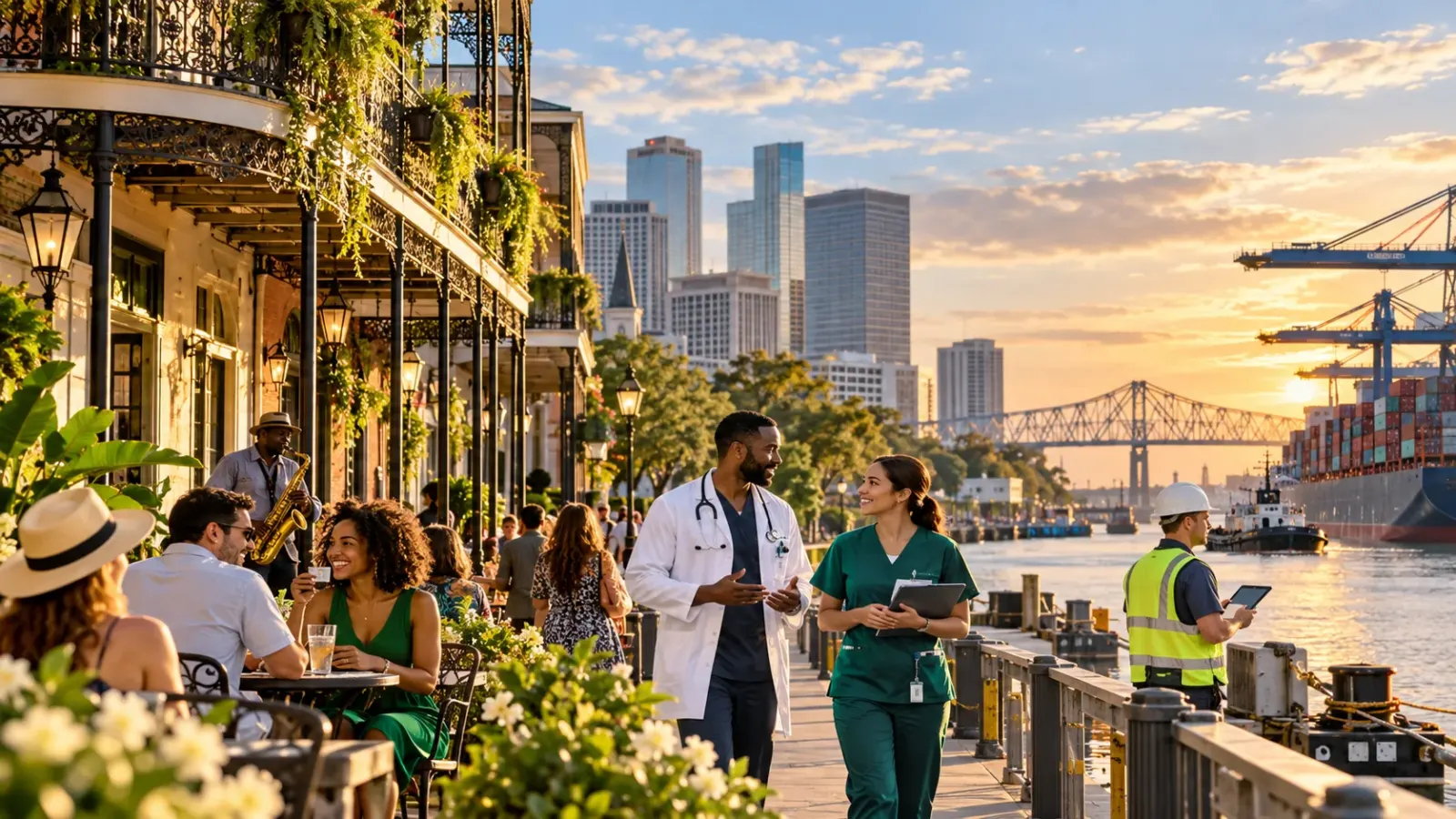
New Orleans sectors from the riverfront to the French Quarter
Overall, these are the sectors where our AI services in New Orleans tend to find repeatable work. Even so, the right fit depends on your workflow, your data and which Louisiana or federal rules apply to it.
Port & River Logistics
Bills of lading, barge delivery tickets and customs paperwork for terminal operators, barge lines and forwarders. This covers river traffic as well as port cargo.
Offshore Energy Services
Service tickets, crew paperwork and equipment certifications for vessel operators supporting Gulf energy work. After all, one missing certificate can hold up a job.
Tourism, Hotels & Events
Group contracts, banquet orders and guest inquiries for French Quarter hotels and convention organizers. Volumes peak especially around Mardi Gras and major festivals.
Healthcare
Records requests, referral intake and prior authorization paperwork for hospital systems and clinics, while patient data stays under HIPAA controls.
Higher Education & Research
Admissions inquiries, transfer credit paperwork and research administration forms for the city’s universities, particularly in busy enrollment periods.
Property Insurance & Claims
Storm claim intake, adjuster notes and policy correspondence for insurers, agencies and independent adjusters. Hurricane season, in particular, can bring a sudden surge.

Good first automation projects for New Orleans teams
Barge Delivery Ticket Matching
The system matches barge delivery tickets against the original booking, bill of lading and terminal receipt. As a result, differences in tonnage, dates or barge numbers stand out. Finally, a dispatcher reviews each exception and approves the record for billing.
Vessel Charter Invoice Review
The system checks charter and service invoices from offshore vessels against day rates, fuel logs and job tickets. Specifically, it flags unusual charges with the supporting page attached. An operations accountant reviews every flag and decides what to dispute.
Event Vendor Contract Checks
The system reads vendor and venue contracts for conventions and events. Key terms like deposits, cancellation dates and insurance land in one sheet. Afterward, an events manager confirms each term ahead of any contract signature.
Medical Records Request Intake
The system sorts records requests from patients, attorneys and insurers by type. Furthermore, it checks each one for a valid authorization and matches the patient. However, a release-of-information specialist reviews each request and approves exactly what leaves the building.
Transcript Course Matching
The system reads incoming transcripts and matches course titles to likely equivalents from your existing transfer tables. Consequently, advisors start from a draft instead of a blank form. Even so, a registrar still reviews and approves every evaluation personally.
Storm Claim Document Checks
After a storm, the system sorts the photos, estimates and policy forms sent with each claim. Next, it checks them against a checklist and requests missing items. An adjuster still reviews every file and decides coverage.
Timing a New Orleans project around festival and storm seasons
Every New Orleans engagement follows the same five stages, all run over video. Similarly, we plan reviews around your calendar, whether that means Mardi Gras, a major convention or the start of hurricane season.
Discovery
To begin with, we interview the staff who handle the work over video and follow the process on screen share. Then we map it end to end and review the systems behind it.
AI Strategy
After that, we rank each opportunity by build cost, time to value and yearly savings. We mark personal data, health records and policyholder files as well, which keeps the risks visible.
Pilot Build
Subsequently, we build the top-ranked automation as a fixed-price pilot using your real documents. That way, you see genuine output before you commit further budget.
Implementation
Following a successful pilot, we connect the system to your live tools and train staff over video. Equally, we add human review steps and write down a rollback plan.
Optimization
Finally, we check accuracy monthly and tune prompts and retrieval. Each month, you receive a written report on the hours and dollars the automation saved, too.
What clients say
New Orleans questions about AI services, Louisiana data law and timing
Do you work with businesses in New Orleans?
Yes. We provide AI services in New Orleans to businesses across Orleans and Jefferson parishes, including Metairie and Kenner. That said, we work from Canterbury in the UK, with no office or staff in Louisiana. We do not travel to clients either. Instead, all delivery is remote, during U.S. business hours on Central time. Accordingly, discovery sessions, demos, training and readouts all run live over video.
What does Louisiana's breach law require of an AI system that holds personal data?
Louisiana’s Database Security Breach Notification Law requires reasonable security procedures for personal information. It also requires businesses to destroy records holding personal data once they no longer keep them. After a breach, businesses must notify affected residents within 60 days of discovery. In addition, Attorney General rules require written notice to its Consumer Protection Section within 10 days of notifying residents. So we limit retention, log access and keep each pipeline easy to audit.
Will the Louisiana Data Privacy Act apply to our business in 2027?
It may. The Act takes effect on January 1, 2027. Broadly, it covers businesses with over $25 million in annual gross revenue. Additionally, the same applies to firms handling personal data of 75,000 or more consumers, households or devices. Firms earning at least half their revenue from selling such data fall under it too. Among other rights, consumers can opt out of profiling behind significant decisions, such as lending, housing or jobs. However, GLBA financial institutions and HIPAA covered entities are exempt. Therefore, your counsel should confirm where it applies.
Can a pilot be timed around Mardi Gras or hurricane season?
Yes. Because the pilot covers one workflow at a fixed price, we can schedule it for a quieter stretch. For instance, a hotel might start after spring festival season. Meanwhile, an insurer may want claims intake tested ahead of hurricane season. To begin with, the free consultation produces a written estimate. If the output holds up, we move to full implementation. That is how most AI services in New Orleans grow with us. Otherwise, you keep the findings.
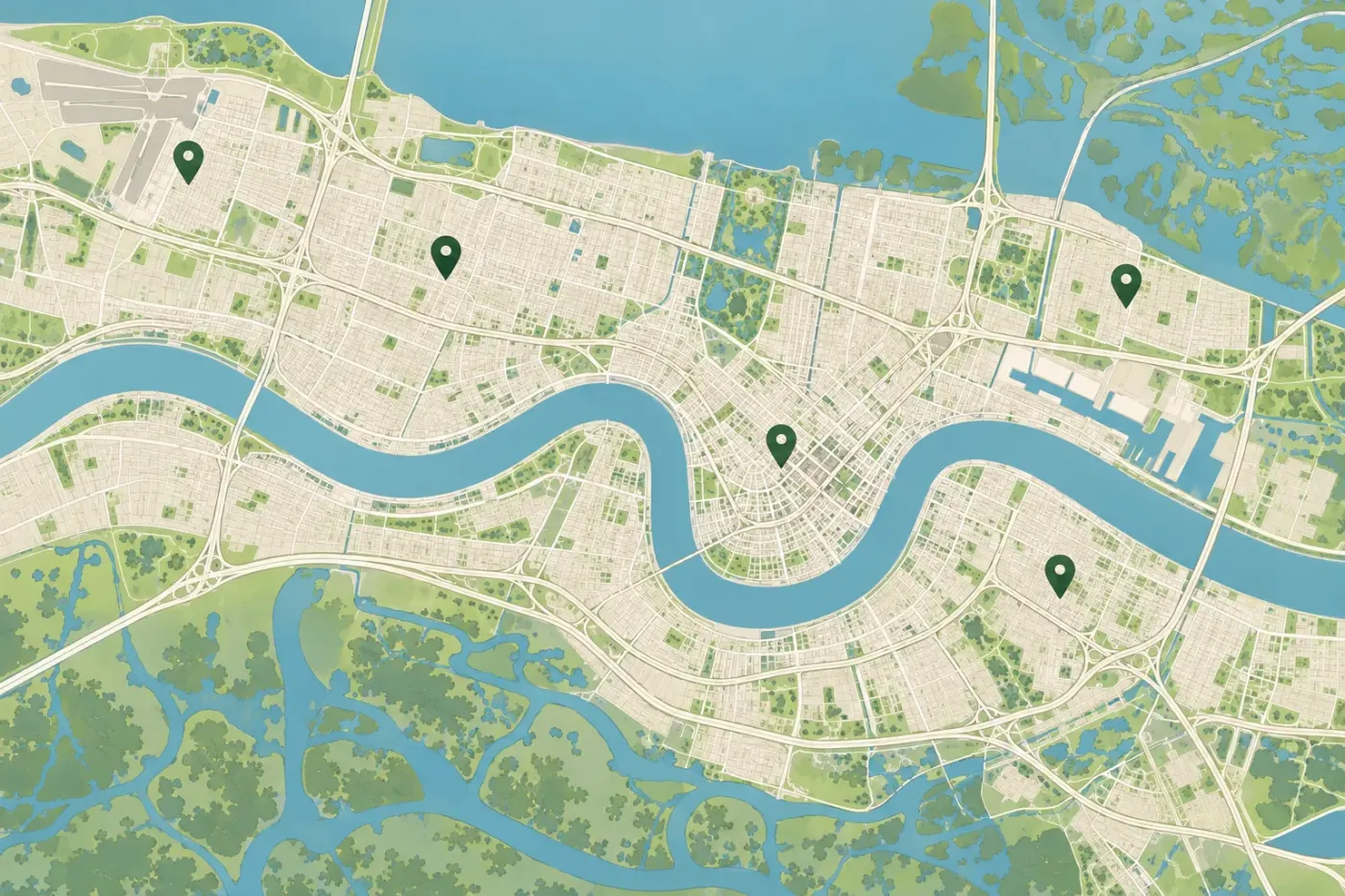

Nearby areas we also serve
Clients frequently operate across state and metro lines. We work throughout the region.

Ready to find out what AI could save your New Orleans business?
Book a free 30-minute consultation. Bring one workflow that eats your team’s week and we will tell you honestly whether automating it is worth the money.