

AI services in Richmond: automation and consulting
Our AI services in Richmond center on the paperwork of a capital and financial hub. For example, that includes dispute files and servicing queues for banking and card operations, plus bid responses for state agency vendors. It also covers regulatory filings for consumer goods companies and records requests for health systems and law firms. At the same time, we work remotely, over video, during U.S. business hours. In addition, every engagement starts with a free consultation and a written estimate of what the work would save.
Capitol Square contracts, card operations and the River City's document trail
Richmond mixes government, finance and long-established industry. For instance, firms near Capitol Square respond to solicitations from state agencies and manage contract deliverables. Meanwhile, the city hosts a Federal Reserve district bank, and banking and card operations centers process disputes, onboarding and servicing. Similarly, consumer goods companies with tobacco-era roots, health systems and downtown law firms all run on records, filings and correspondence every day.
Because of that mix, the Virginia Consumer Data Protection Act applies unevenly. Specifically, it covers businesses that process personal data of at least 100,000 Virginia consumers a year, or 25,000 if they earn over half their revenue from selling data. However, financial institutions under Gramm-Leach-Bliley and HIPAA-covered entities are exempt.
Therefore, AI services in Richmond should start by confirming which rules each dataset falls under. After that, we design review steps to match, so that a bank dispute queue and a consumer brand mailing list get different controls.

How AI services in Richmond support bank, agency and legal teams
We pick work that is repetitive, well defined and simple to reverse if something goes wrong. For example, a card operations team might want dispute evidence organized. Likewise, a state vendor might need a solicitation broken into a requirements list. Even so, credit, legal and clinical decisions stay with your staff, while the system reads, sorts and drafts.
Document & Data Processing
Dispute letters, solicitation documents, product filings and medical records requests read into structured fields, while each value stays linked to its source.
Customer Response Automation
Routine cardholder, vendor and patient questions answered from approved content, whereas anything about fees, awards or care goes to a person.
Workflow Automation
Intake, review and approval steps connected across your case system, document management and CRM, instead of copied between screens.
Custom AI Agents
Agents that finish multi-step tasks, such as building a contract deliverable package, inside the approval limits you set.
Internal Knowledge Search
Procedure manuals, contract terms and firm precedents searchable in plain English, while every answer cites the page it came from.
Reporting Automation
Monthly dispute aging, contract status and matter reports assembled from your systems automatically, then explained in short summaries.

Richmond sectors, from Capitol Square to the Fan and the West End
These are the sectors where our AI services in Richmond find the most repeatable paperwork. Even so, the right first project depends on your workflow, your systems and the regulations you already follow.
Banking & Card Operations
Dispute handling, account servicing and onboarding files for bank and credit card operations, so that the work passes your vendor risk review.
State Government Vendors
Solicitation analysis, deliverable reports and invoicing for firms contracting with Virginia agencies, while staying within data the contract permits.
Consumer Goods
Regulatory filings, product specifications and distributor communication for consumer products companies, such as those with tobacco-heritage portfolios.
Health Systems
Records requests, referral intake and billing follow-up for hospitals and physician groups, while clinicians approve anything clinical.
Law Firms
Document review support, deposition summaries and matter intake for downtown firms, while attorneys make every legal judgment.
Insurance & Benefits
Enrollment changes and claim correspondence, as well as broker questions, for carriers and benefits administrators across the Richmond region.

Good first automation projects for Richmond teams
Card Dispute Evidence Packets
The system gathers the cardholder letter, transaction details and merchant responses into one organized packet for each dispute. Also, it flags missing documents against your deadlines. However, a dispute analyst decides every outcome.
State Solicitation Breakdown
The system reads a state agency solicitation and lists each requirement, form and due date in a tracking sheet. Then the proposal manager confirms the list and assigns writers, so nothing is missed before submission.
Product Filing Assembly
For each product change, the system collects specifications, ingredient data and prior filings into a draft submission package. Meanwhile, the regulatory lead reviews every field and signs off before anything is filed.
Medical Records Request Sorting
Requests from patients, attorneys and insurers are read, checked for valid authorization and sorted by type. As a result, the release-of-information team works a clean queue, and staff approve every release.
Deposition Summary Drafts
Transcripts are summarized by topic, witness and exhibit, with page and line references. In particular, contradictions are flagged for the case team, and an attorney edits each summary before it is relied on.
Benefits Change Intake
Life-event and enrollment change forms arrive by email and portal. Then the system reads them, checks eligibility rules and drafts the update. Finally, a benefits specialist approves each change before it reaches the carrier.
Five stages for a Richmond engagement, with every session on video
Our AI services in Richmond run in five stages, all over video. Specifically, our hours are 10:00 AM to 8:00 PM in Richmond. As a result, reviews can fit around legislative sessions, filing deadlines or quarter-end close.
Discovery
To begin with, we interview the people who handle the work over video. Then we map each step and note which datasets fall under GLBA, HIPAA or the VCDPA.
AI Strategy
After that, we score each opportunity on build cost, time to value and annual savings. Moreover, we flag any idea that would touch credit, legal or clinical decisions.
Pilot Build
Then we build the top-ranked idea as a fixed-scope pilot. As a result, your team judges real output from your own files before approving more budget.
Implementation
Following the pilot, we connect the system to your live tools and train staff on video calls. In addition, we set human review gates and a documented rollback plan.
Optimization
Finally, we review accuracy every month and tune prompts and retrieval. In addition, each review ends with a written report on hours saved for your managers and compliance team.
What clients say
Richmond questions on AI services, the VCDPA and state work
Do you work with businesses in Richmond?
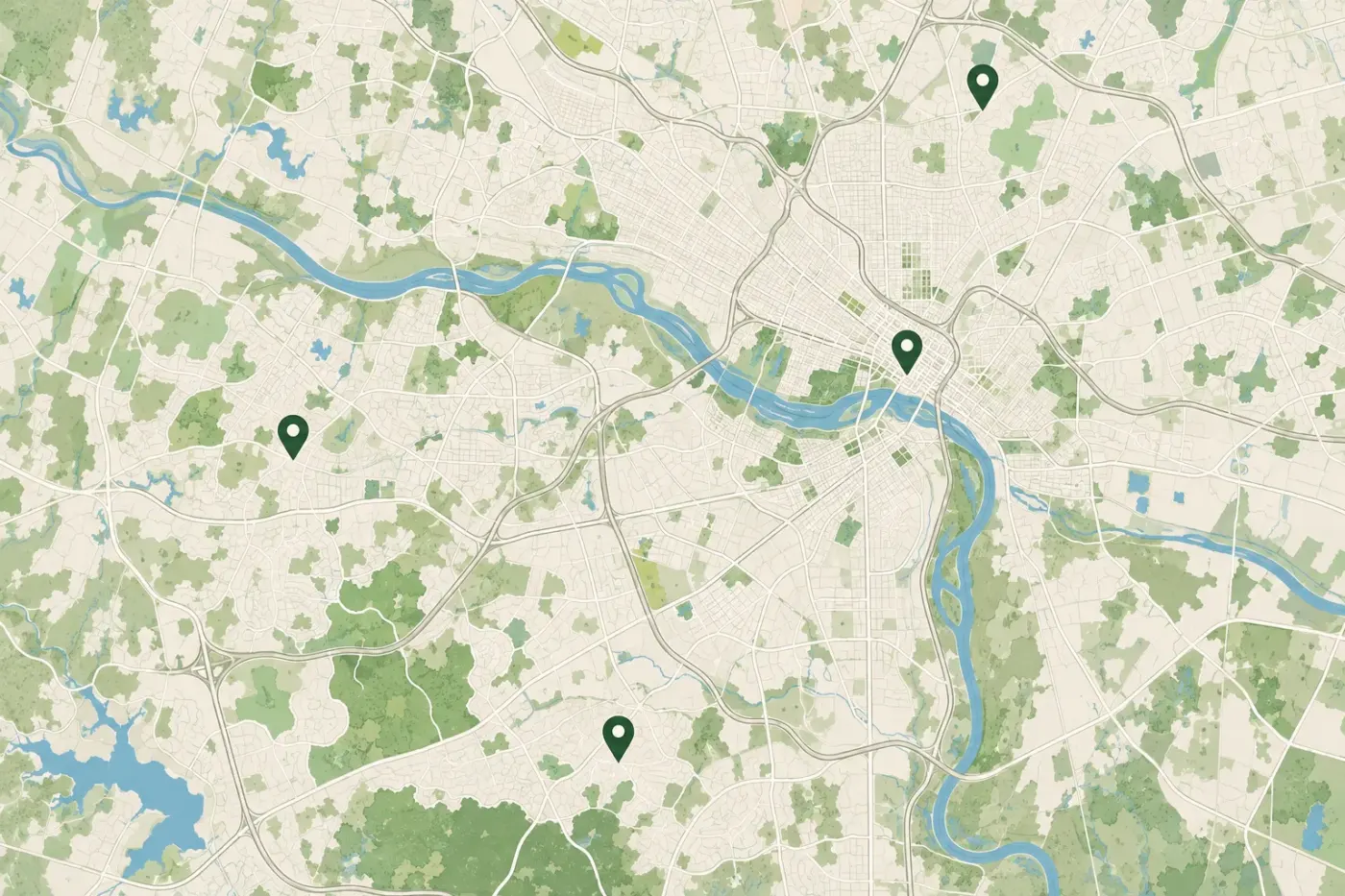
Yes. We provide AI services in Richmond to businesses downtown and in the West End, Short Pump, Glen Allen, Midlothian and Chesterfield. That said, delivery is fully remote from our base in Canterbury in the UK, so we do not visit offices in person. Instead, discovery calls, demos and training happen over video, Monday to Friday, 9:00 AM to 7:00 PM Central, which is 10:00 AM to 8:00 PM Eastern.
Is our Richmond business covered by the Virginia Consumer Data Protection Act?
It depends on volume and type. Specifically, the VCDPA applies if you process personal data of at least 100,000 Virginia consumers a year. It also applies at 25,000 consumers if over half your gross revenue comes from selling personal data. However, GLBA financial institutions and HIPAA-covered entities are exempt. Consequently, a bank and a consumer brand nearby may face different rules. Even so, your counsel should confirm where you fall.
Does Virginia have a high-risk AI law we must follow?
Not currently. The General Assembly passed HB 2094, the High-Risk Artificial Intelligence Developer and Deployer Act, in 2025. However, the Governor vetoed it on March 24, 2025, and the House sustained the veto. Otherwise, it would have taken effect July 1, 2026. Even so, we build as if similar rules may return, because a person reviews every consequential decision. Your counsel should check for new bills each session.
Can a state vendor pilot start with a past solicitation?
Yes, and it is a sensible start. For example, a vendor can test requirement breakdown on a closed solicitation and compare it with the team’s own checklist. Because the pilot is fixed in scope and price, you see accuracy before any live bid depends on it. Then, if results hold up, we move to active work. In addition, the free consultation ends with a written estimate of cost and hours saved.

Nearby areas we also serve
Clients frequently operate across state and metro lines. We work throughout the region.

Ready to find out what AI could save your Richmond business?
Book a free 30-minute consultation. Bring one workflow that eats your team’s week and we will tell you honestly whether automating it is worth the money.